Organized crime syndicates and other bad actors to make billions of dollars targeting Americans from the comfort of countries that won’t prosecute them.

These criminal syndicates seize on any illicit activity that will generate profit without regard to the harms they cause. One lesser-known activity that criminals increasingly focus on is content theft. Using pirated movies, TV shows and other content bait, these syndicates lure Internet users to their sites so they can infect their computers, abuse their credit cards and steal personal and financial information. Over the last decade, the line between traditional organized crime syndicates and piracy networks has blurred.
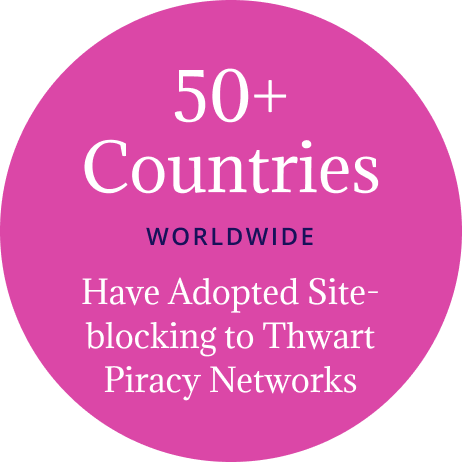
It’s time to consider other options to combat the dangers of an industry that preys on Americans from the comforts of overseas villas. One of the most potentially promising ideas to combat piracy is called “site-blocking,” a procedure that is used in more than 50 countries but not yet tried in the piracy context in the United States.6 Site-blocking usually involves a rigorous court process to identify websites that deal exclusively in illegal products and services (such as piracy), but are out of reach of domestic civil or criminal enforcement. Once the website is found to be infringing, an order is served upon relevant intermediaries, such as Internet Service Providers (ISPs), to stop these criminal websites from being readily accessible in that country.
Site-blocking has powerful advantages—overcoming jurisdictional obstacles and allowing courts to issue effective, enforceable orders that empower U.S. intermediaries to stop their networks and infrastructure from being used by foreign actors for harm. The intermediaries are protected from liability for actions taken pursuant to these court orders, keeping the focus properly on the foreign websites responsible for the harm.
The rise of content piracy as a serious threat to Internet users and the blurring of the lines between traditional organized crime syndicates and piracy requires a serious policy discussion. To that end, we highlight the following reports that lay out the criminal ecosystems, the harms they cause, and an analysis of how 50-plus countries have adopted site-blocking measures to protect their citizens.